GLPro Official Website Blood Sugar Supplement Guide
A Blood Sugar Supplement Guide For Buyers
Supplements in this category are allowed to say they support blood sugar. They are not allowed to say they treat, prevent or manage diabetes, and none of them replaces a prescribed medicine. This guide covers what the claims mean, what the evidence looks like, what a label must disclose, and the questions worth asking before any of it matters.
What a blood sugar supplement is allowed to claim
The wording on these labels is precise, and it is worth decoding.
Two registers exist on a supplement label, and a shopper who can hear the difference between them has done most of the work.
A structure/function claim describes an effect on the normal structure or function of the body, and the example the FDA itself gives is calcium builds strong bones
. Claims of this kind are not reviewed before a product goes on sale: the manufacturer holds the substantiation, notifies the agency within 30 days of marketing, and prints the disclaimer. The reason the FDA gives for that disclaimer is the cleanest sentence in this area: only a drug can legally make such a claim.
A health claim is the other register. It links a substance to a disease and needs authorisation under the significant scientific agreement standard. Three kinds of claim may appear on a supplement label — health claims, nutrient content claims and structure/function claims — and only the first is reviewed before it is printed.
So supports healthy blood sugar
is a legal sentence, and lowers blood sugar
, controls diabetes
or you can stop your tablets
are not. A product printing the second set is describing a drug, which has a different approval route and different trials behind it.
Advertising is policed separately. The FTC requires adequate substantiation for every objective claim and reads the net impression of the whole advertisement, so an implied disease claim counts even where no disease is named on the page.
So the useful question at a sales page is not what the headline says, it is what a reasonable person would come away believing. A page that never types the word diabetes can still make a disease claim with a chart and a white coat. What the GLPro label prints, in both of its versions, is on the label page.
What the evidence in this category actually shows
Honest about both the promise and the size of it.
One rule governs this section. GLPro does not publish what is in the capsule, so no trial named below is a trial of this product, and the ingredient named in each sentence is the one that trial gave.
Start with the most careful summary anybody has written about one ingredient in this aisle. A Cochrane review of cinnamon for diabetes pooled ten randomised trials and 577 participants at a mean dose of about 2 g a day, over four to sixteen weeks. Fasting glucose was inconclusive, and no significant difference was found in HbA1c, insulin or after-meal glucose. Its conclusion: insufficient evidence to support the use of cinnamon.
Chromium reads better on paper. Twenty-eight randomised trials pooled in 2020 found HbA1c lower by 0.71% along with improvements in fasting glucose, insulin and insulin resistance. The fine print matters as much as the number: heterogeneity on the fasting glucose analysis reached 99.8%, and the authors put their own conclusion no higher than that the results might support its use.
That is the shape of this category: a handful of ingredients with real trials behind them, modest effects where they exist at all, wide disagreement between studies, and a persistent gap between the amount a trial handed out daily and the amount a blend on a shelf is likely to hold.
Two things follow. The question worth asking is never whether an ingredient works, it is how much of what, for how long, in whom. And every finding above belongs to a named ingredient at a named dose, so none of it transfers to a bottle whose contents are not named. How long those trials ran is worked through in check six of the checklist.
What a supplement label has to tell you
A short compulsory list, and it is more than most buyers check.
Federal rules set a floor here, and the floor is higher than most shoppers think to check against. A Supplement Facts panel is required on the package by 21 CFR 101.36, and it has to carry every one of these:
- the serving size, and the number of servings in the container
- the name of every dietary ingredient in the product
- the amount by weight of each one, per serving
- the percent Daily Value where a Daily Value exists, and a marker where none has been established
- for a botanical, the part of the plant it was made from
Underneath the panel comes the other-ingredients line: the capsule shell, the fillers, the flow agents and the colours, in descending order of weight. The package also carries the words dietary supplement
, the net contents, the name and place of business of the manufacturer, packer or distributor, and a domestic address or phone number for reporting a serious adverse event.
That is what the package owes you. What nobody owes you is a photograph of that panel on a web page. No rule requires a seller to publish it online, which is why what does the label say
and what does the sales page say
are two different questions, and why the first sometimes waits for the box.
Even a complete panel has limits. The NIH Office of Dietary Supplements records that US law does not require supplements to be standardised and that the term has no legal definition, that working quality out from a label is difficult, and that for most botanicals the constituents responsible for the effects are not known.
So read a panel as a floor rather than a verdict. It tells you what is in the bottle and how much of it, and leaves the rest to the batch record and the seller’s willingness to answer a question: how a lot number is checked.
Where a proprietary blend leaves a buyer
Legal, common, and it costs the reader something.
A proprietary blend is the one place a panel may keep something back, and it is legal, ordinary and cheap to print.
What it may do: group several ingredients under one name and declare the total weight of the group instead of each amount. What it may not do: hide which ingredients are in it. The names still appear, in descending order of predominance by weight.
That order is the only clue a blend gives, and it is a weak one. First on the list is the heaviest thing in the mixture, and that is the whole of the signal. In a 500 mg blend the first name could be 400 mg or 120 mg, and the last could be a dusting whose job is to appear on the list at all.
One number does real work. The blend total is a ceiling, and no ingredient inside the blend can be more than it, so where a trial dose is larger than the whole blend the arithmetic has answered your question already. That single comparison is the most useful thing anybody can do with a panel, and it is why a claim about an amount is not available to a product that publishes none.
And when a page names nothing at all, descending order has nothing left to order. Four moves are still open to a shopper:
- Ask for the panel before you pay. An email asking for a photograph of it is a fair question, and the answer tells you something whichever way it comes.
- Read the bottle, not the page that sold it. The panel is required on the package, so the information exists. Publishing it is the optional part.
- Take the panel rather than the marketing to whoever prescribes your medicine. They can read one and have no use for the other.
- Watch the clock. If the panel only arrives when the box does, the days you have to change your mind are the days that matter, and they usually run from the purchase rather than the delivery.
GLPro sits in exactly that position. Its order page calls it a proprietary blend of natural ingredients
and goes no further, so those four moves are the ones available: what the seller does say, and the window the answer has to fit inside.
Blood sugar supplements alongside prescribed medicine
One conversation, and it is worth having before the first capsule.
The one that matters. Insulin, sulfonylureas and meglitinides lower blood sugar on their own, and the federal patient page on low blood glucose names them as the medicines whose side effect it can be. Anything else acting on glucose could add to that. Whoever prescribed the medicine is the person to ask, and they will want to see the label.
That conversation is short, and it belongs before the first capsule rather than after the first odd reading. Take the bottle, and a list of everything else being taken, including the things people forget: the fish oil, the multivitamin, the herbal tea somebody recommended.
Two federal pages are worth reading first. MedlinePlus is blunt about the swap people are tempted by: you should not change or stop your diabetes medicines on your own. And NCCIH sets out that supplements can interact with medications, including over-the-counter ones, that some of those interactions are serious, and that you should talk with your health care providers about all dietary supplements and medications you take.
For a product whose ingredients are not named, a specific interaction cannot be assessed at all: there is nothing to look up. That is neither a reassurance nor an alarm, and it is the reason the conversation happens with the bottle in hand.
The signs of low blood sugar are worth knowing by heart for anyone on those medicines: they are on the side effects page.
Who writes this GLPro page?
Four claims about how this desk works, chosen because a sceptical reader can audit every one of them in ten minutes. That is the only reason to make them.
- The bottle is the source. The two claim lines, the capsule count and the supply length come from the printed label and the seller’s own artwork. Prices come from the seller’s order page, with the date they were read printed beside them.
- The gaps are marked, never filled in. The seller names no ingredient and prints no amount, so this website names none and estimates none — including in the structured data a search engine reads.
- Sources are real and linked in the sentence. Every study cited here was confirmed against its PubMed record before it was written down, and every government page was opened and checked by its title rather than assumed.
- Corrections change the date. Write to [email protected] and the review date at the foot of the page moves forward.
We earn when you buy. Glproroutine is the USA Authorized Retailer named at the top of this page, and this website makes money on orders placed through it. That is exactly why the unnamed formula, the three-star review and the plain statement that GLPro is not a GLP-1 medicine are all here: they are where our interest and yours pull apart, and you should be able to watch us choose.
Order support on +1 (720) 738-6364 and [email protected] handles tracking, changes, cancellations and refunds. It is not a sales line, and this website never presents it as a way to place an order: orders go through the checkout only.
Sources used on this GLPro page
- U.S. Food and Drug Administration. Structure/Function Claims. https://www.fda.gov/food/nutrition-food-labeling-and-critical-foods/structurefunction-claims
- U.S. Food and Drug Administration. Label Claims for Conventional Foods and Dietary Supplements. https://www.fda.gov/food/food-labeling-nutrition/label-claims-conventional-foods-and-dietary-supplements
- NIH Office of Dietary Supplements. Botanical Dietary Supplements: Background Information. https://ods.od.nih.gov/factsheets/BotanicalBackground-HealthProfessional/
- Leach MJ, Kumar S. Cinnamon for diabetes mellitus. Cochrane Database Syst Rev. 2012;2012(9):CD007170. https://pubmed.ncbi.nlm.nih.gov/22972104/
- Asbaghi O, Fatemeh N, Mahnaz RK, et al. Effects of chromium supplementation on glycemic control in patients with type 2 diabetes: a systematic review and meta-analysis of randomized controlled trials. Pharmacol Res. 2020;161:105098. https://pubmed.ncbi.nlm.nih.gov/32730903/
- National Institute of Diabetes and Digestive and Kidney Diseases. Low Blood Glucose (Hypoglycemia). https://www.niddk.nih.gov/health-information/diabetes/overview/preventing-problems/low-blood-glucose-hypoglycemia
- National Center for Complementary and Integrative Health. Know the Science: How Medications and Supplements Can Interact. https://www.nccih.nih.gov/health/know-science/how-medications-supplements-interact
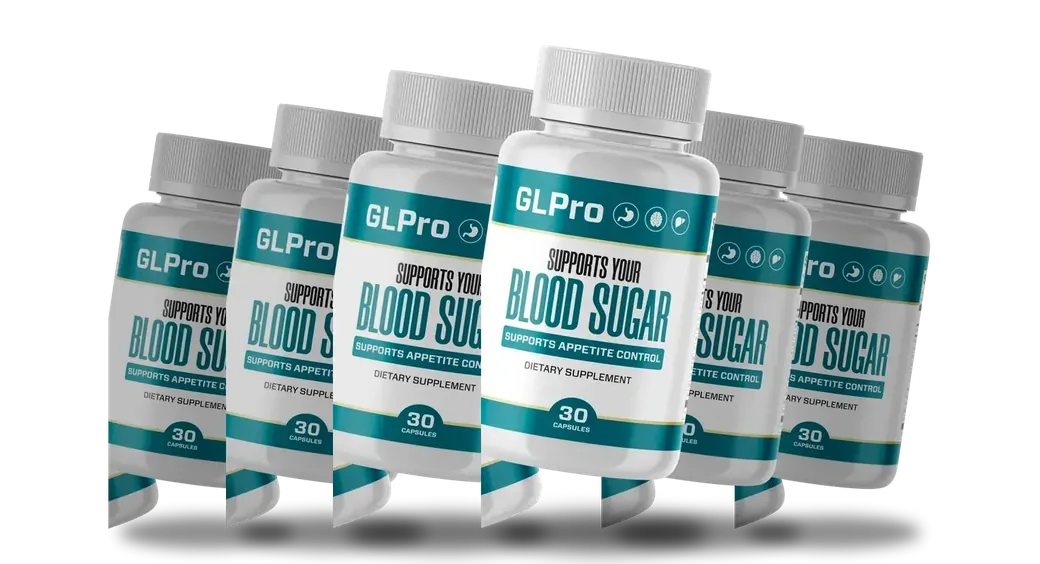
Apply all of that to GLPro
One capsule a day, 30 to a bottle, no published formula, and 60 days from purchase to decide whether it earns its place.
$49 to $79 a bottle · 60 days to change your mind
Order GLPro On The Official WebsiteFree fast US shipping on six bottles · 60-day money-back guarantee · lot GLP-26/GL-4941