GLPro Official Website Blog The trial clock
Four Weeks To Six Months: The Clock A Blend Does Not Name
A blend with no names on it hides one thing above all: there is no trial to look up and no observation window to compare against. Here is how long the research in this category actually ran, and what that does and does not settle.
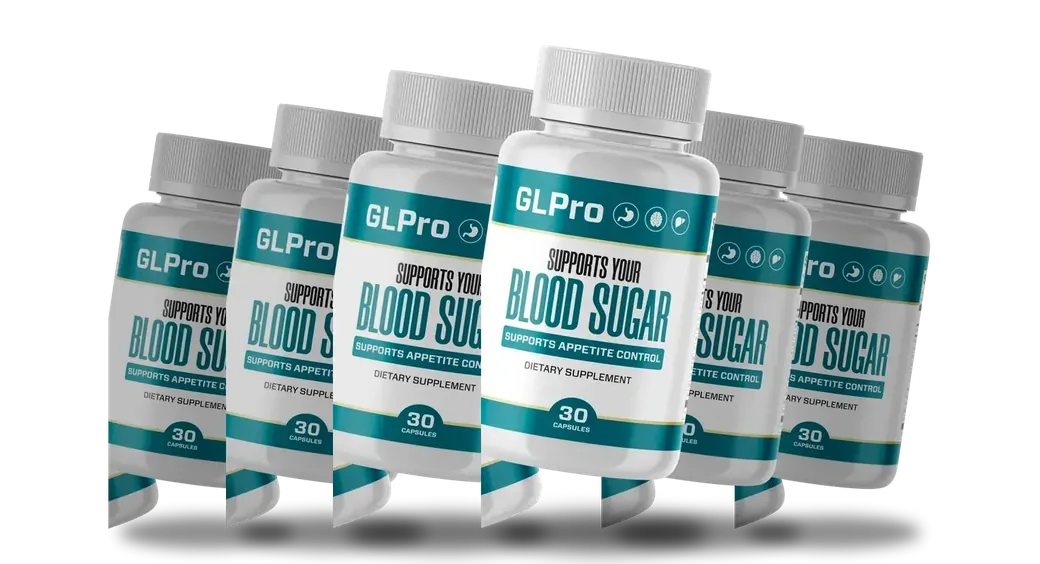
- An unpublished blend hides a specific thing: which research clock applies. With no name, there is no trial to look up and no duration to compare against.
- The category’s trials commonly ran three to four months, with the published range running from four weeks to six.
- Sixty days sits inside that range, at its short end. One trial below ran exactly two months.
- Longer is not automatically better. One meta-regression found no factor, trial duration included, significantly changed the measured response.
A supplement, and blood sugar is a medical subject. GLPro is a capsule sold as a dietary supplement for healthy adults aged 18 and over. It does not treat, prevent or manage diabetes, it is not a GLP-1 medicine, and it replaces nothing a clinician has prescribed. Insulin, sulfonylureas and meglitinides lower blood sugar on their own, so anyone taking one raises a new capsule with the prescriber first. Nothing here is advice about your own care. Read the safety page beside it.
What an unnamed blend actually hides
A proprietary blend usually hides amounts — the names are printed, the milligrams are grouped under one total, and a reader can at least look up what each name has been trialled at. GLPro does not publish a list at all. The seller’s order page says the formula is a proprietary blend of natural ingredients and stops there.
Most writing about that absence concentrates on potency. There is a plainer consequence — with no name, there is no study to open, no dose to compare and, above all, no duration. You cannot ask how long the research ran without knowing what the research was on. The label page lists every blank in one place.
- No name means no trial to read and no observation window to borrow.
- No amount means no comparison with what a trial gave.
- No blend total means not even a ceiling on the whole.
- What is published is the form, the count, the price and the window: a capsule, 30 to a bottle, $49 to $79 a bottle, 60 days to change your mind. The pricing page has the packs.
GLPro does not publish what is in the capsule, so no trial named below is a trial of this product. In every sentence that follows, the ingredient named is the ingredient that trial gave, and nothing more is implied by naming it.
How long this category’s trials ran
What the record can still tell a buyer is how long researchers thought they needed to watch for. That is a fact about study design rather than about any product, and it is the single most useful thing a sixty-day window can be measured against.
| Ingredient and dose | Duration | What it read at that length |
|---|---|---|
| Cinnamon, mean 2 g a day, 10 trials | 4 to 16 weeks | Inconclusive on fasting glucose; no significant difference in HbA1c. |
| Fenugreek seed extract, 1 g a day | 2 months | Glycaemic control and insulin resistance, in 25 patients. |
| Chromium picolinate, 200 or 1,000 mcg a day | 4 months, read at 2 and 4 | HbA1c improved at two months only in the higher-dose group. |
| Alpha-lipoic acid, 300 to 1,200 mg a day | 6 months | Fasting glucose and HbA1c trended down with dose. A trend, not a result. |
Every row is an ingredient GLPro has not been shown to contain. The dose and the duration are as each record states them.
The Cochrane review of cinnamon for diabetes sets the honest ceiling for the whole aisle: ten randomised trials, 577 participants, a mean dose of 2 g of cinnamon a day, durations of four to sixteen weeks, and a conclusion of insufficient evidence to support the use of cinnamon. Risk of bias was high or unclear in all but two of those trials, and cinnamon is the most-studied name in this category.
The trial that ran exactly sixty days
One entry in the record ran at precisely the length of this guarantee, which makes it the natural comparison. Gupta, Gupta and Lal gave 25 newly diagnosed patients a fenugreek seed hydroalcoholic extract at 1 g a day for two months, double-blind and placebo-controlled, and reported changes in glycaemic control and in insulin resistance. Twenty-five people, one centre, published in 2001 — a small study and not strong evidence of anything. What it is good for is scale, because two months was long enough for a research team to think a readout worth taking, and fenugreek is what they gave.
- Sixty days is a real observation window in this category, not a token one.
- It is at the short end of the range rather than the middle of it.
- It is a purchase policy first. The guarantee page sets out what it covers and how a return is started.
The trial that was read at two months and again at four
The most instructive design in the set read the same people twice. Anderson and colleagues gave 180 people chromium picolinate at 200 mcg or 1,000 mcg a day and measured at two months and again at four. At two months, HbA1c had improved only in the 1,000 mcg group. At four months it was lower in both chromium groups. The same intervention looked partial at two months and clearer at four, in one study, with nothing changed but time. It is a 1997 open-label design, the paper itself notes the benefit appeared above the safe and adequate intake range, and chromium is what it gave.
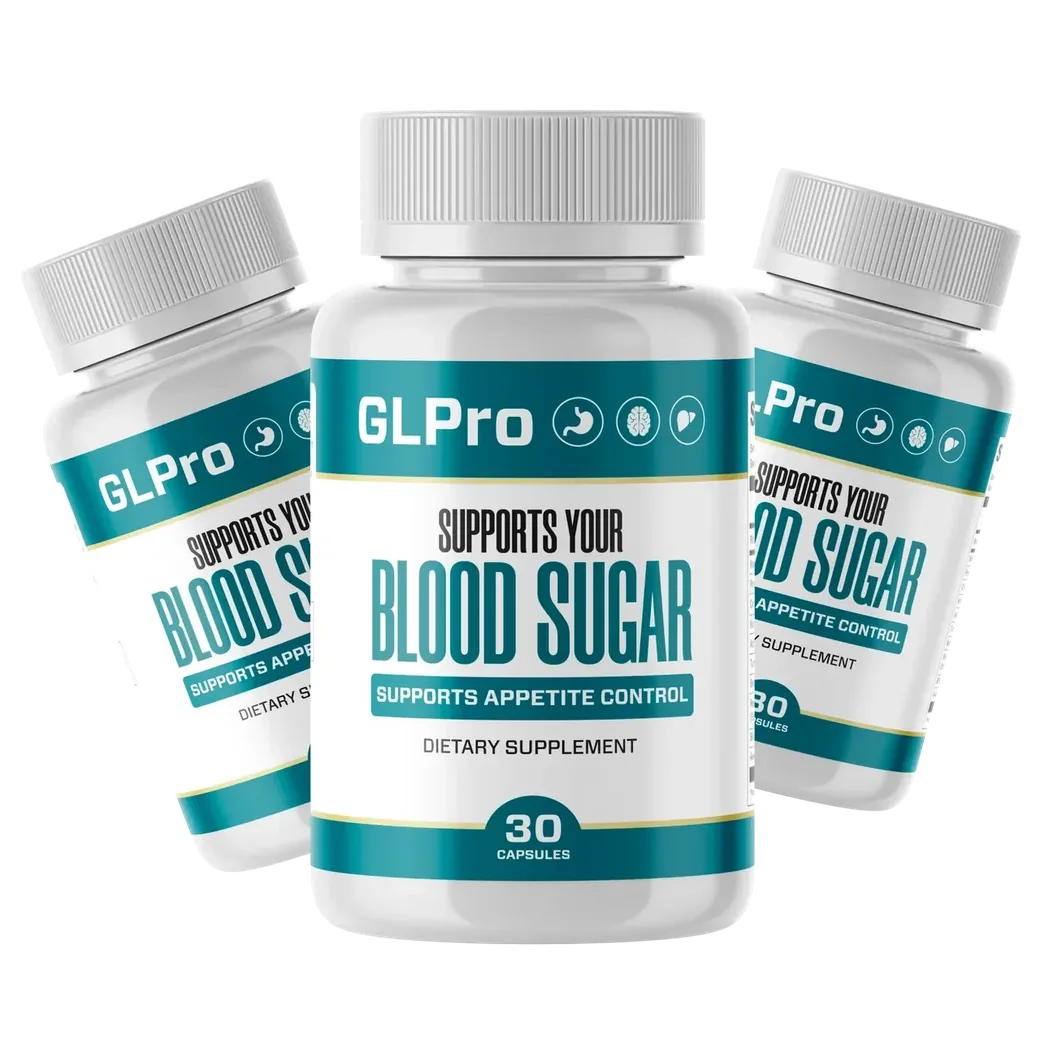
Three bottles covers ninety days, not sixty
A month of capsules still in the cupboard on the day the window shuts is worth more than the lowest price a bottle. Six bottles is cheaper per bottle and is four months bought before anything has been decided.
$49 to $79 a bottle · 30 capsules a bottle · 60 days to change your mind
Order GLPro
The longest window in the set, and what it found
At the far end, Porasuphatana and colleagues ran alpha-lipoic acid at 300, 600, 900 or 1,200 mg a day for six months in 38 patients, randomised, double-blind and placebo-controlled. Fasting glucose and HbA1c trended to decrease in a dose-dependent manner, and trended is the operative word the paper uses. Thirty-eight people over six months produced a direction rather than a significant result, so doubling the observation window past four months did not convert a trend into a finding here, and alpha-lipoic acid is what was given.
The counterweight: longer is not automatically better
It would be easy to leave this article at more months, more certainty. The record does not support that, and the clearest contradiction comes from the most-studied name in the aisle. Deyno and colleagues pooled sixteen randomised trials of cinnamon and reported fasting glucose down 0.545 mmol/L and HOMA-IR down 0.714 against placebo, with no significant change in HbA1c. Their meta-regression found no factor significantly affecting the treatment response, and how long a trial ran was among the factors tested. Heterogeneity was high, at 83.6 percent — and all of it concerns cinnamon.
Set against that, Kim and colleagues pooled 119 randomised trials across nine nutrients and found that baseline HbA1c and study duration did influence the effects of chromium and of vitamin E on HbA1c. Only four nutrients reached significance at all in that analysis, all as add-ons to antidiabetic drugs.
| Analysis | What it tested | What it found about length |
|---|---|---|
| 16 cinnamon trials, meta-regression | Whether any factor changed the measured response | No factor did, trial duration included. |
| 119 trials, nine nutrients | Whether duration changed the effect on HbA1c | It did, for chromium and vitamin E. |
Both are pooled analyses of named ingredients. Neither studied GLPro, and the two do not agree with each other.
Two honest readings of the same literature disagree about whether length changes the answer. A website selling capsules has an obvious incentive to quote only the second one. This desk quotes both, because the first is the reason not to tell anyone that four months would have worked where two did not.
The right clock, not the longer one
The lesson the record actually supports is narrower and more useful than more time is better. It is that different outcomes have different minimum windows, and the choice that matters is which outcome you are watching.
- A fasting reading can move inside a week and can move for reasons that have nothing to do with a capsule.
- A short-window glycation marker reaches back about a month, which is why short trials measure one.
- A long average reaches back about three months, which is why it moves slower than the refund window.
- A routine can be judged inside sixty days more reliably than any of them, and the routine page is where that is set out.
What none of this says about this capsule
Nothing above is evidence about GLPro. Every row in that table is an ingredient this product has not been shown to contain, and the seller publishes no list against which any of them could be checked. There is no trial of the finished capsule.
What the durations do is set expectations before money changes hands. If the research this category is built on commonly runs three or four months, a sixty-day window is a fair consumer term and a short experiment at the same time. What the label supports is the ceiling on what is claimed here.
How to spend sixty days anyway
None of this makes the window useless. It makes it a window for a different question: not did the slow number move, but is this something worth continuing.
- ✓Start the count on paper. The date of the first capsule is the only number that cannot be reconstructed later.
- ✓Name what you are watching on day one, before anything has moved.
- ✓Decide on day 45, which leaves a fortnight to act on the decision.
- ✓Buy the pack that matches the window, not the one with the lowest price a bottle. Buying through this website is what keeps the order inside the guarantee described here.
The short answer
The published record in this category runs from four weeks to six months, and clusters at three and four. One trial ran at exactly sixty days. So the guarantee is inside the range, at its short end, and that is worth knowing before a six-bottle order.
What the record does not support is the comfortable conclusion that a longer course measures better. One pooled analysis found duration changed nothing at all; another found it changed something for two nutrients. Judge a capsule on the clock that fits what you are actually watching, which for sixty days means the routine and the thing you named on day one.
Sources cited in this article
- Gupta A, Gupta R, Lal B. Effect of Trigonella foenum-graecum (fenugreek) seeds on glycaemic control and insulin resistance in type 2 diabetes mellitus: a double blind placebo controlled study. J Assoc Physicians India. 2001;49:1057-61. https://pubmed.ncbi.nlm.nih.gov/11868855/
- Anderson RA, Cheng N, Bryden NA, et al. Elevated intakes of supplemental chromium improve glucose and insulin variables in individuals with type 2 diabetes. Diabetes. 1997;46(11):1786-91. https://pubmed.ncbi.nlm.nih.gov/9356027/
- Porasuphatana S, Suddee S, Nartnampong A, et al. Glycemic and oxidative status of patients with type 2 diabetes mellitus following oral administration of alpha-lipoic acid: a randomized double-blinded placebo-controlled study. Asia Pac J Clin Nutr. 2012;21(1):12-21. https://pubmed.ncbi.nlm.nih.gov/22374556/
- Leach MJ, Kumar S. Cinnamon for diabetes mellitus. Cochrane Database Syst Rev. 2012;2012(9):CD007170. https://pubmed.ncbi.nlm.nih.gov/22972104/
- Deyno S, Eneyew K, Seyfe S, et al. Efficacy and safety of cinnamon in type 2 diabetes mellitus and pre-diabetes patients: A meta-analysis and meta-regression. Diabetes Res Clin Pract. 2019;156:107815. https://pubmed.ncbi.nlm.nih.gov/31425768/
- Kim Y, Oh YK, Lee J, Kim E. Could nutrient supplements provide additional glycemic control in diabetes management? A systematic review and meta-analysis of randomized controlled trials of as an add-on nutritional supplementation therapy. Arch Pharm Res. 2022;45(3):185-204. https://pubmed.ncbi.nlm.nih.gov/35304727/